Why Hybrid Learning Is the New Norm for International Students
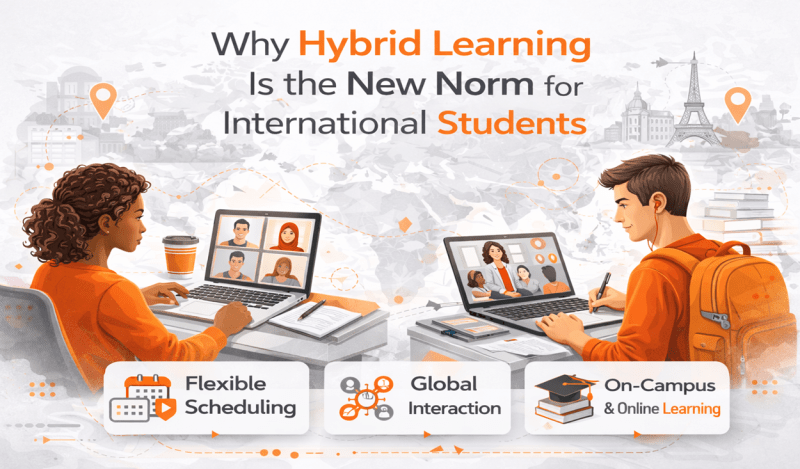
Hybrid learning has become the new norm for international students, combining the flexibility of online education with the benefits of in-person classroom experiences. This blog explores why hybrid learning is transforming global education, highlighting advantages such as flexible schedules, digital collaboration, cost savings, and improved accessibility. Discover how universities worldwide are adopting hybrid models to support international students and enhance modern learning experiences.
Table Of Contents
Why Hybrid Learning Is the New Norm for International Students
Why hybrid learning is the new norm for international students. Discover benefits, flexibility, and how universities are adopting hybrid education models.
Keywords: Why hybrid learning is the new norm, hybrid learning for international students, hybrid education model universities, online and classroom learning, benefits of hybrid learning, digital learning for students, future of hybrid education, online leraning, offline learning
Higher education has changed over the past ten years in ways that few could have foreseen. What started out as emergency remote instruction during the epidemic swiftly transformed into a deliberate, long-term overhaul of degree delivery. Moreover, these days, hybrid degree programs that purposefully blend online and in-person instruction have become commonplace. They allow institutions to expand high-quality education to bigger, more varied student bodies, maintain crucial in-person experiences, and provide flexibility for learners worldwide. This blog examines why hybrid and blended learning has become the new standard for international students, how educational institutions and students are adjusting, what a top-notch hybrid degree looks like, and helpful advice for students preparing to study in this new environment.
What do we mean by “hybrid degrees” and “online–offline learning”?
Hybrid Degrees (Blended Degrees)-
A hybrid degree also called a blended degree is an academic program that combines online learning with in-person (offline) learning in a structured and intentional way.
Neither mode is dominant; instead, universities design the curriculum so each part (online or offline) serves a specific purpose.
How hybrid degrees work?
- Online components include recorded lectures, virtual discussions, digital assignments, quizzes, simulations, and self-paced modules.
- Offline components include classroom sessions, practical labs, workshops, internships, exams, or short campus residencies.
The online part provides flexibility, while the offline part ensures hands-on learning, networking, and real-world practice.
Online–Offline Learning (Mixed-Mode Learning)-
Online–offline learning refers to an education model where students learn partly on the internet and partly in physical classrooms. It’s not limited to full degree programs; it can apply to single courses, certificate programs, or training sessions.
- Online learning includes virtual classes on platforms like Zoom or Teams, pre-recorded video lectures, e-books, discussion forums, quizzes, and the use of learning management systems (LMS) such as Moodle or Canvas, while offline learning involves campus lectures, group activities, lab work and practical experiments, as well as field visits, projects, or clinical placements.
Spectrum of delivery models-
- Fully online degrees- Entire program delivered and assessed remotely.
- Hybrid degrees (split models)- Majority online with periodic in-person intensives (week-long residencies, labs, or exams).
- Blended courses- Individual courses mixing live classroom sessions and online activities (common within on-campus degrees).
- HyFlex- Courses offering simultaneous in-person and online participation options for each session.
Understanding the spectrum helps students choose programs that match learning needs, career goals, and personal constraints.
What factors have led to the rapid uptake of hybrid learning
The rapid growth of hybrid learning is the result of a powerful combination of evolving learner needs, technological advancements, and shifting global education trends. Students today expect flexibility, affordability, and access to high-quality education, while institutions are under pressure to innovate, expand reach, and remain competitive. These forces together have pushed hybrid learning from an alternative option to a mainstream model.
- Learner flexibility needs- More students especially working professionals, carers, and geographically dispersed learners want to study without relocating or pausing careers. Hybrid programs let learners access world-class faculty while keeping jobs or families.
- Cost pressures-Institutions are seeking ways to expand access while optimizing campus capacity. Digital delivery reduces some marginal costs per additional student.
- Employer acceptance- As top schools and well-known platforms introduced accredited online and hybrid degrees, employer skepticism eased—especially where programs demonstrate project-based outcomes and real-world skills.
- Technological maturity: High-quality hybrid learning is now possible at scale because to improved learning platforms, proctored tests, simulation tools, and widespread broadband.
- Policy and regulation changes: Many national and regional regulators updated rules to permit online credits and entire degrees delivered digitally, opening official pathways for hybrid offerings.
- Lessons Learned from the COVID-19 Era- The pandemic was a catalyst that accelerated technology adoption. Institutions, faculty, and students gained experience with online tools, leading to long-term shifts in teaching approaches. Hybrid models emerged as a sustainable solution that combines the strengths of both online convenience and classroom engagement.
The global e-learning market size and continued growth reflect these trends: estimates place the online learning market at hundreds of billions of dollars and projecting sustained high growth through the decade.
How blended/hybrid learning works effectively?
- Combines the best of both worlds- It mixes online flexibility with the personal interaction of classroom learning.
- Improves understanding- Students can review online materials anytime and then clarify doubts during in-person sessions.
- Boosts motivation- The variety of learning methods videos, quizzes, discussions, and classroom activities keeps students engaged.
- Supports different learning styles- Visual, auditory, and hands-on learners all benefit from multiple formats.
- Enhances digital skills- Students become confident using technology, an essential skill for modern workplaces.
- More convenient- It allows learners to balance studies with jobs, family, or personal commitments.
- Promotes independent learning- Students learn to manage time, revisit lessons, and take responsibility for their progress.
- Real-world readiness- Hybrid models are widely used in corporate training, making students better prepared for professional environments.
Who’s offering hybrid degrees?
The hybrid and online degree ecosystem include traditional universities, digital-first institutions, and platform partners.
- University-platform partnerships- Coursera, edX, and similar platforms now host accredited degrees from universities across the globe, enabling flexible delivery and scaling. Many reputable universities offer online or hybrid master’s and bachelor’s programs on these platforms.
- Traditional universities expanding online- Established institutions (from University of London to top national universities) have formal online degree pathways, often with in-person optional residencies or local examination centers. Examples include University of London’s online degrees and various universities launching online master’s and bachelors.
- New program launches in national contexts- Regions with growing higher-education demand like India have seen leading institutes launch online and hybrid degrees (e.g., IITs and state universities introducing online BScs, MBAs, or dual-degree options). Regulatory updates have allowed a higher mix of online credits in engineering and related fields.
- Business schools and professional programs- Online MBAs and executive programs rebounded after an initial post-pandemic lull; schools integrate in-person networking modules and residencies to balance learning and career outcomes. The Financial Times and other outlets have noted growing application numbers for online MBAs as institutions tackle networking and experiential gaps with hybrid design.
These examples show the hybrid model is being adopted across provider types, from global platforms to national flagship universities.
What are the key design principles required to create high-quality hybrid degree programs?
If hybrid is to be more than marketing, programs must be intentionally designed. Here are core principles.
- Start from learning outcomes, not delivery mode- Define what students must know and do by program end—then choose which activities (online modules, simulations, labs, face-to-face clinics) are best suited to those outcomes.
- Active learning and retrieval practice- Use asynchronous content for core knowledge (micro-lectures, readings, automated exercises) and reserve synchronous/in-person sessions for higher-order activities: discussions, case work, labs, and simulations.
- Chunking, modularity, and flexible pacing- Break the curriculum into modules learners can complete in sequences that fit life commitments. Offer credit recognition for prior learning and stackable micro credentials that count toward the full degree.
- High-quality assessment and academic integrity- Adopt varied assessments: project portfolios, open-book case exams, proctored summative assessments, peer assessment, and workplace-based evaluation. Use authenticity-focused tasks less susceptible to cheating.
- Scaffolded community and mentorship- Create small-group cohorts, synchronous tutorial sessions, and mentor/advisor touchpoints to combat isolation and help learners navigate challenging material.
- Purposeful in-person experiences- Make every on-campus touchpoint count: immersive labs, industry placements, capstone showcases, networking events—activities where physical presence adds clear value.
- Inclusive and accessible design- Ensure content is accessible (captions, transcripts, multiple formats), platform interfaces are mobile-friendly, and schedules consider global time zones.
- Continuous evaluation and iteration- Collect data on learning behaviors and outcomes, run course-improvement cycles, and iterate quickly digital delivery facilitates rapid updates based on learner feedback.
What do you understand by pedagogy and the teacher’s evolving role?
Pedagogy refers to the methods, strategies, and approaches that teachers use to support and enhance student learning. It is not just about delivering content—it includes how lessons are planned, how concepts are explained, how learners are engaged, and how progress is assessed. Pedagogy focuses on how teaching happens, ensuring that learning is meaningful, student-centered, and effective.
The Teacher’s Evolving Role
In today’s digital and hybrid learning environments, the role of the teacher is shifting significantly:
- From knowledge giver to facilitator- Teachers now guide students in discovering information instead of simply delivering it.
- From instructor to mentor- They support learners in developing critical thinking, problem-solving skills, and independent learning habits.
- From controller to collaborator- Teachers work alongside students, encouraging participation, group work, and shared learning.
- From traditional lecturer to digital navigator- With the rise of technology, teachers help students use digital tools, online platforms, and multimedia resources effectively.
- From evaluator to feedback provider- Continuous, personalized feedback has become more important than one-time exams.
What technology stack makes hybrid learning possible and effective?
A strong and well-integrated technology stack is essential for making hybrid learning possible and effective. It combines digital tools, platforms, and systems that support both online and offline learning experiences. Here are the key components:
- Learning Management System (LMS)- Platforms like Moodle, Canvas, Blackboard, or Google Classroom act as the central hub where students access lessons, submit assignments, take quizzes, and track progress.
- Video conferencing tools- Tools such as Zoom, Microsoft Teams, and Google Meet enable live classes, discussions, virtual office hours, and collaborative group work.
- Content creation tools- Teachers use tools like PowerPoint, Canva, Loom, Screencast-O-Matic, and Adobe tools to create engaging lectures, videos, and digital study materials.
- Collaboration platforms- Applications like Slack, Microsoft Teams, Padlet, and Google Workspace help students work together, share ideas, and collaborate on projects.
- Assessment and feedback tools- Platforms such as Turnitin, Kahoot, Quizizz, and online gradebooks support quizzes, plagiarism checks, interactive tests, and personalized feedback.
- Cloud storage and file sharing- Tools like Google Drive, OneDrive, and Dropbox ensure easy access to files, documents, and resources from anywhere.
- Classroom technology- Smart boards, classroom cameras, lecture capture systems, and microphones support seamless integration between in-person and online environments.
- Learning analytics systems- These tools analyze student engagement, performance, and behavior to help teachers adjust instruction and provide targeted support.
Equity, access, and the digital divide-
Hybrid models can widen access allowing learners in low-density regions, working adults, and caregivers to study but they can also exacerbate inequities if not implemented thoughtfully. Good hybrid programs provide low-bandwidth options, asynchronous equivalents, local exam centers, bursaries, and strong student services to mitigate these issues. Challenges include-
- Internet access and device constraints: Students without reliable broadband or modern devices may struggle with synchronous components or video-heavy content.
- Time-zone coordination: Global cohorts require careful scheduling or asynchronous alternatives for those in distant time zones.
- Cost barriers: While online formats can reduce relocation costs, tuition and expensive proctored assessments can still pose obstacles.
- Support services: Mental-health support, disability services, and career advising must be accessible remotely as well as on-campus.
How do careers, employability, and industry links enhance the value of a hybrid degree?
- Real-world exposure- Industry partnerships give students the opportunity to interact with employers through guest lectures, workshops, company visits, and project-based learning. This prepares them for workplace expectations.
- Practical skill development- Hybrid programs often integrate hands-on assignments, case studies, and simulations designed in collaboration with industry experts. This helps students build job-ready skills that employers actively seek.
- Enhanced employability- Career services such as CV workshops, interview preparation, networking sessions, and internship support ensure students are well-prepared to enter the job market confidently.
- Internships and work placements-Industry connections open doors to internships, apprenticeships, and live consultancy projects where students gain valuable experience that strengthens their CV and employability.
- Updated and relevant curriculum- Strong industry links ensure the curriculum stays aligned with current market trends, emerging technologies, and evolving employer needs.
- Networking opportunities- Students get opportunities to interact with professionals from various fields, helping them build networks that can lead to jobs, mentorships, and collaborations.
What regulatory and accreditation considerations are essential for developing a high-quality hybrid degree?
Hybrid offerings must satisfy national regulators and accreditation bodies. Key points:
- Credit recognition and residency rules- Some regulators limit the proportion of credits that can be delivered online; others have flexible frameworks permitting major online components.
- Quality assurance- External reviewers look for alignment between learning outcomes and delivery, robustness of assessment, and student support.
- Cross-border delivery- Universities delivering to international students must consider local recognition and professional licensure requirements for programs like nursing, engineering, or law.
What practical advice should students consider before enrolling in a hybrid degree program?
If you’re a global student exploring hybrid degrees, here’s a checklist and guidance to make an informed choice.
- Clarify your priorities- Do you need career advancement while working? Is hands-on lab experience essential? Are you price-sensitive? Your priorities determine whether a hybrid program is a fit.
- Research the program’s in-person requirements- How many days on campus are required, when, and what happens during those periods? Are local exam centers available? Some programs require a single residency per year; others expect short weekly seminars.
- Check accreditation and recognition- Confirm the awarding institution is accredited and that the degree is recognized in the countries where you plan to work.
- Inspect the curriculum and assessment types- Look for project-based assessments, authentic tasks, and employer-linked projects. Beware programs relying solely on multiple-choice tests.
- Evaluate support services- Does the program provide career counseling, mental-health support, academic tutoring, and tech help accessible across time zones?
- Review technology and access needs- Check minimum device specs, software licenses, proctoring requirements, and whether lectures are downloadable for offline study.
- Understand total costs and funding options- Consider tuition, travel/residency costs, exam fees, and living expenses during campus visits. Do they offer scholarships or income-share agreements?
- Talk to alumni and faculty- Alumni can tell you about real-world outcomes and how well the program supports remote learners. Faculty can clarify expectations for collaboration and attendance.
What challenges must institutions tackle to successfully deliver hybrid learning programs?
Universities transitioning to hybrid degrees face organizational and cultural hurdles-
- Building robust technological infrastructure- Reliable internet, updated hardware, secure servers, and a strong Learning Management System (LMS) are essential. Institutions must invest in technology that supports both online and on-campus learning seamlessly.
- Training faculty for hybrid teaching- Teachers need new skills in digital pedagogy, online engagement, multimedia content creation, and managing classroom–online transitions. Continuous professional development is crucial.
- Ensuring student engagement- Keeping students motivated in a mixed learning environment can be difficult. Institutions must design interactive lessons, provide timely feedback, and create opportunities for collaboration.
- Maintaining academic quality- Balancing flexibility with academic rigour is challenging. Institutions must ensure assessments, learning outcomes, and instructional quality remain consistent across online and offline modes.
- Providing equal access- Students may face challenges such as limited internet access, lack of devices, or accessibility needs. Institutions must ensure inclusivity and support for all learners.
- Managing administrative complexity- Scheduling hybrid classes, coordinating resources, tracking student progress, and supporting digital platforms require efficient administrative systems.
- Addressing data security and privacy- With more activities happening online, protecting student data, safeguarding digital platforms, and ensuring cybersecurity is essential.
The future: Where hybrid goes next
The future of hybrid learning will become more advanced, flexible, and fully integrated as technology and learner expectations evolve. Instead of simply blending online and offline classes, hybrid education will form a seamless ecosystem where digital tools, physical spaces, and personalized learning pathways work together. Students will enjoy greater flexibility, accessing resources anytime and studying from anywhere, making higher education more inclusive and adaptable. Emerging technologies like AI, VR, and data analytics will personalize learning and create immersive experiences through virtual labs, simulations, and intelligent tutoring systems. Classrooms will also be redesigned with smart boards, lecture capture tools, and collaborative digital platforms to support blended delivery. Industry collaboration will grow stronger, offering students more internships, remote projects, and global partnerships. As employers seek digital skills and practical experience, hybrid programs will help students graduate with future-ready competencies. Ultimately, hybrid learning will emphasize flexibility, innovation, and interactive learning tailored to individual goals and professional aspirations.
How universities can introduce a hybrid program?
- Market scan and stakeholder consultation- Assess demand, employer needs, and accreditation constraints.
- Define learning outcomes and competencies- Map outcomes to online/in-person activities.
- Build student journey maps- For various learner archetypes (working professional, international undergrad, etc.).
- Select platform and local partners- LMS, simulation tech, and local lab/assessment centers.
- Faculty development and instructional design- Train teams in online pedagogy and cohort facilitation.
- Pilot program and iterate- Start small, measure outcomes, and scale with QA processes.
- Scale and sustain- Build support services, career partnerships, and financial models.
Conclusion
Hybrid degrees are more than a pandemic-born workaround—they represent a sustainable, learner-centered reimagining of higher education. For global students, hybrid programs unlock access to international faculty and curricula without always having to relocate. They make lifelong learning feasible, allow careers and study to coexist, and emphasize demonstrable skills through project-based assessment.
But the promise comes with caveats. Students must choose programs with sound pedagogy, transparent accreditation, and real in-person value where needed. Institutions must design programs thoughtfully, invest in faculty training, and address equity proactively. When both sides meet these conditions, hybrid degrees can deliver the best of both worlds: the global reach and flexibility of digital learning, coupled with the irreplaceable human learning found in physical collaboration and practice.
Short FAQs on Hybrid Degrees
Q1. Are hybrid degrees accredited?
Ans- Yes, many hybrid degrees are awarded by accredited institutions. Always verify the specific program accreditation and professional recognition.
Q2. Will employers accept hybrid degrees?
Ans- Increasingly yes especially when programs include real-world projects and employer partnerships. Reputation of the awarding institution also matters.
Q3. How much in-person time is typical?
Ans- It varies from a single annual residency to regular weekly seminars. Check program details for exact residency schedules.
Q4. Are hybrid degrees cheaper?
Ans- Sometimes savings on relocation and campus housing offset tuition differences. But residencies and proctored exams may add costs.
Q5. Can you work while studying a hybrid degree?
Ans- Yes, this is a major advantage. Many hybrid programs are structured for working professionals.
Q6. Are practical skills taught effectively online?
Ans- Yes, through simulations, virtual labs, local partner labs, and concentrated in-person sessions when needed.
Q7. Do hybrid students get campus services?
Ans- Top programs provide remote access to student support, libraries, and career centers; confirm availability before enrolling.
Q8. How do assessments work?
Ans- A mix project portfolios, open-book exams, proctored assessments, peer review, and workplace evaluations.
Q9. Will hybrid programs be around long-term?
Ans- Evidence and market trends suggest hybrid models are likely to be a stable, growing part of higher education.
Q10. How to pick a hybrid program?
Ans- Prioritize accreditation, alignment with career goals, clarity about in-person requirements, support services, and alumni outcomes.
Published on: 7/3/2026Last updated: 8/5/2026
0 comments
No comments yet. Be the first to comment!